Amsterdam 2022: Who Represents the Jordaan?
How migration, mosques, and municipal elections shape representation in one of Europe's most diverse cities.
Data: CLEO / CBS / OpenStreetMap
Amsterdam Elects 45 Seats
In March 2022, Amsterdam held its Gemeenteraadsverkiezingen — municipal council elections. 586 polling stations across the city recorded votes for a total of 25 political parties. The map shows colors associated with the strongest political party by neighborhood. Hover over any neighborhood to see details.
Amsterdam elects its council from a single, citywide 45-seat electoral district, using a flexible list system. All legal residents, citizens or otherwise, are allowed to vote in local Dutch elections. Here are the results of the 2022 elections:
| Party | Seats | Vote % |
|---|---|---|
| PvdA | 9 | 18% |
| GL | 8 | 15% |
| D66 | 7 | 14% |
| VVD | 5 | 11% |
| BIJ1 | 3 | 7% |
| PvdD | 3 | 7% |
| DENK | 2 | 4% |
| JA21 | 2 | 4% |
| SP | 2 | 4% |
| Volt | 2 | 4% |
| CDA | 1 | 3% |
| FvD | 1 | 2% |
The Jordaan: Brown Cafes and Progressive Votes
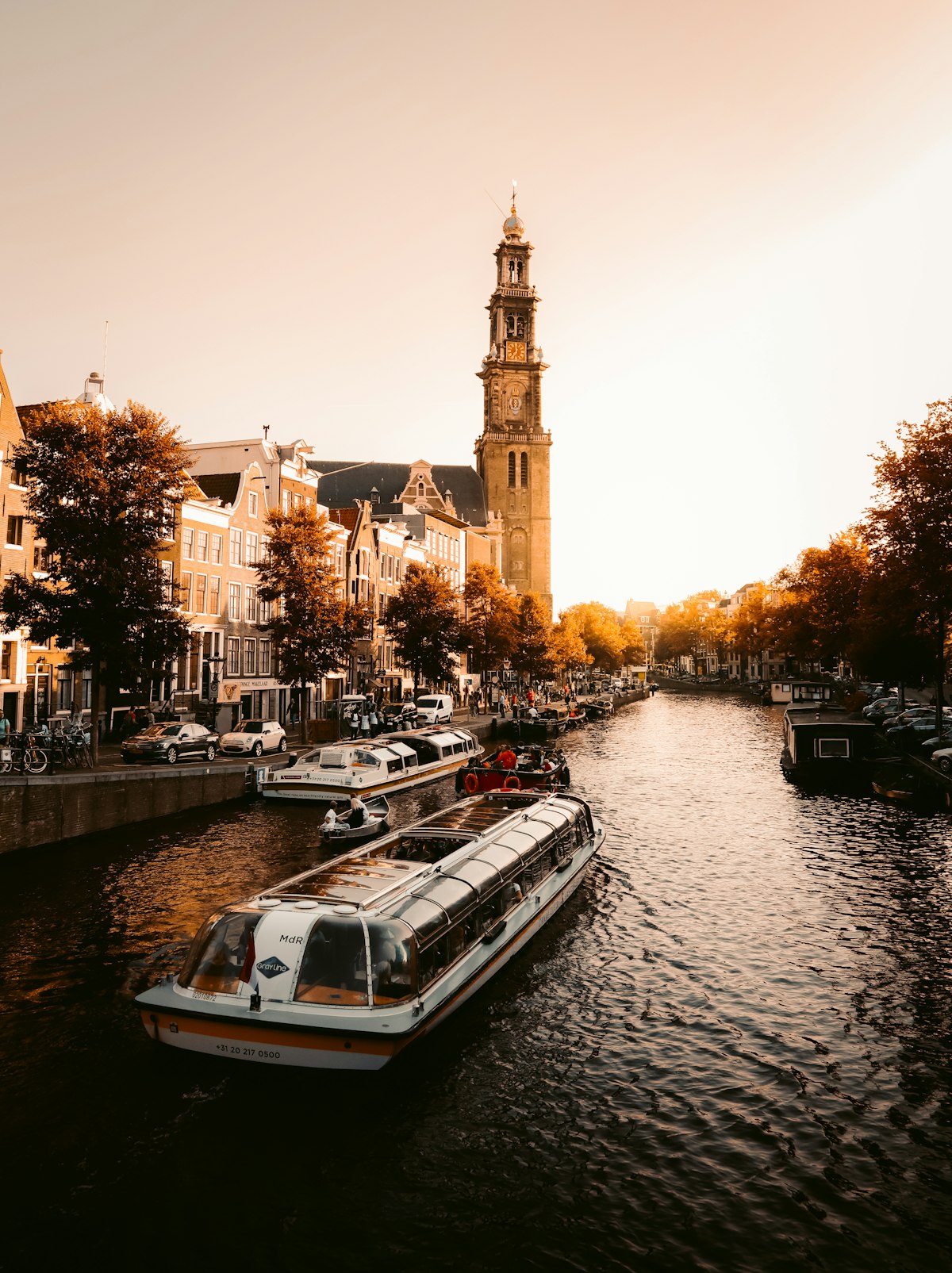
The Jordaan is Amsterdam's most iconic neighborhood — narrow streets along canals, hidden courtyard gardens (hofjes), and the city's densest concentration of bruine kroegen(brown cafes), the wood-paneled pubs that have anchored Dutch social life for centuries. Café 't Smalle (1786) and Café Chris (1624) are neighborhood institutions.
Once a working-class district for laborers and immigrants, the Jordaan gentrified from the 1980s onward. Today it's home to highly educated, native-Dutch residents. Over 85% have a Dutch or Western background. PvdA and GL dominate, each pulling around 20% of the vote.
PvdA (Labour) was founded in 1946 from the ashes of World War II. Under Prime Minister Willem Drees it built the Dutch welfare state, including the landmark old-age pension. Historically the dominant force on the Dutch left, it still holds deep roots in neighborhoods like the Jordaan. GroenLinks was born in 1990 from a merger of four small parties spanning communists, pacifists, Christian radicals, and early environmentalists — an unusual coalition that found its voice combining green politics with progressive social values.
The Saturday Noordermarkt farmers' market sells organic cheese, herring, and appeltaart. Winkel 43's apple pie is legendary. Every September the Jordaan Festival fills the streets with levensliederen(life songs) — the Dutch equivalent of fado.
Nieuw-West: Amsterdam's Moroccan Heart
Cross the A10 ring road into Nieuw-West and the city transforms. In Osdorp Midden and Overtoomse Veld, 65–75% of residents have a non-Western migration background — predominantly Moroccan and Turkish. DENK captures over 30% of the vote here, making these its strongest neighborhoods in the entire country.
DENK (meaning both “think” and “thank” in Dutch) was founded in 2015 by Tunahan Kuzu and Selçuk Öztürk, two sitting MPs of Turkish descent who broke away from PvdA after clashing over integration policy. The party positions itself as a voice for Dutch citizens with a migration background, campaigning against ethnic profiling and discrimination. It won three seats in its very first national election in 2017.
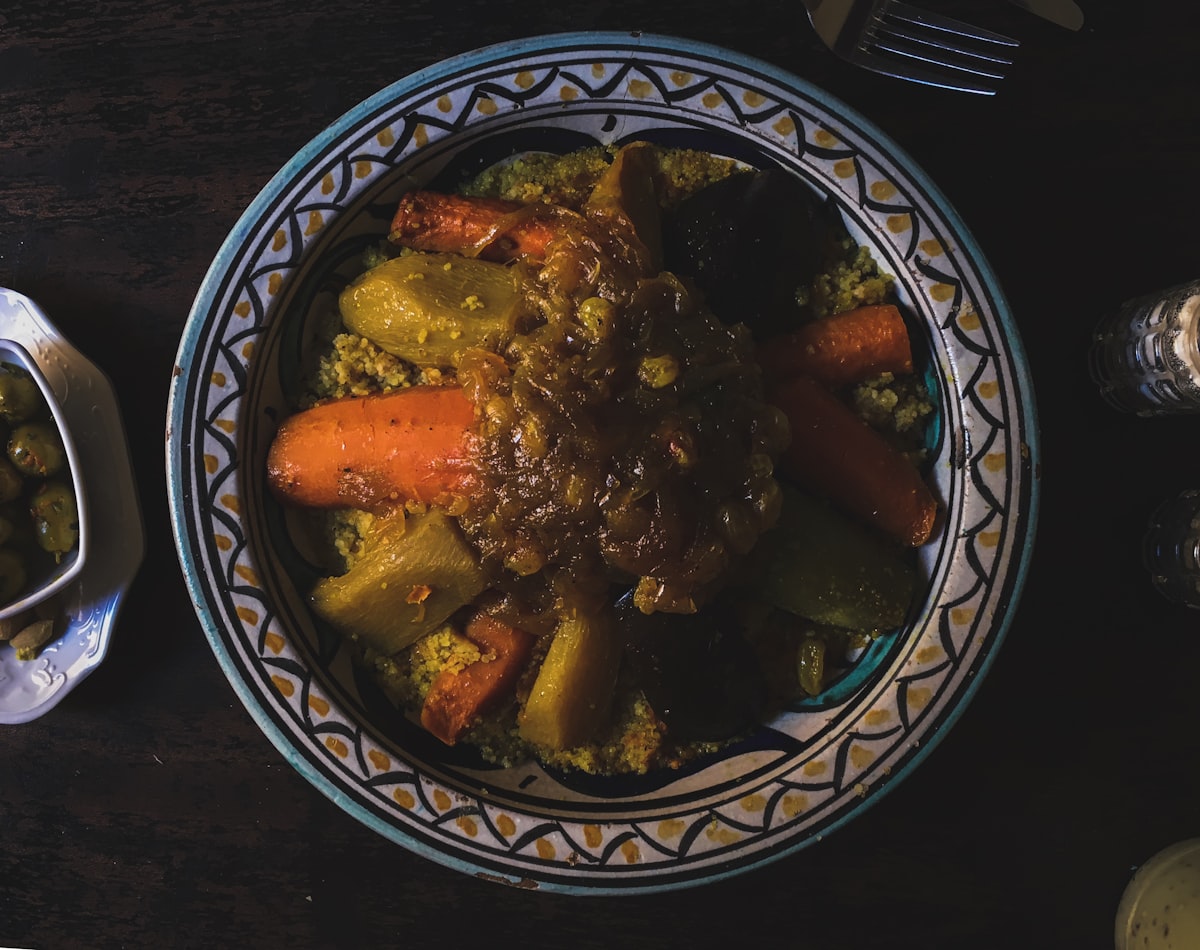
The streets around August Allebéplein feel like a different city: halal butchers, Moroccan bakeries selling msemen and baghrir, Turkish pideshops, and tea houses where men watch Al Jazeera. Restaurant du Maroc serves tagines with fries — a distinctly Dutch-Moroccan fusion. Marhaba, the first fully halal and alcohol-free Moroccan restaurant in the Netherlands, opened here.
During Ramadan the neighborhood comes alive after sunset with communal iftarmeals. The local mosques — the nearest is often under 500 meters away — serve as community centers year-round, hosting language classes and neighborhood councils.
The Bijlmer: Surinamese Amsterdam
Amsterdam Zuidoost — the Bijlmer — has the highest concentration of Surinamese, Antillean, and Ghanaian residents in the Netherlands. The map shows non-Western migration background glowing across the district, with some neighborhoods exceeding 75%.
BIJ1 wins its strongest support in the K-buurt — the only neighborhood in Amsterdam where it is the largest party. But PvdA dominates most of Zuidoost, reflecting older Surinamese ties to Labour.
BIJ1 (pronounced “bij een” — “together”) was founded in 2016 by Sylvana Simons, a well-known Black television presenter of Surinamese descent who had briefly joined DENK before starting her own movement with a more explicitly anti-racist and intersectional platform. In 2021 Simons won a seat in parliament, making BIJ1 the first party led by an Afro-Surinamese woman to enter the Dutch Tweede Kamer.
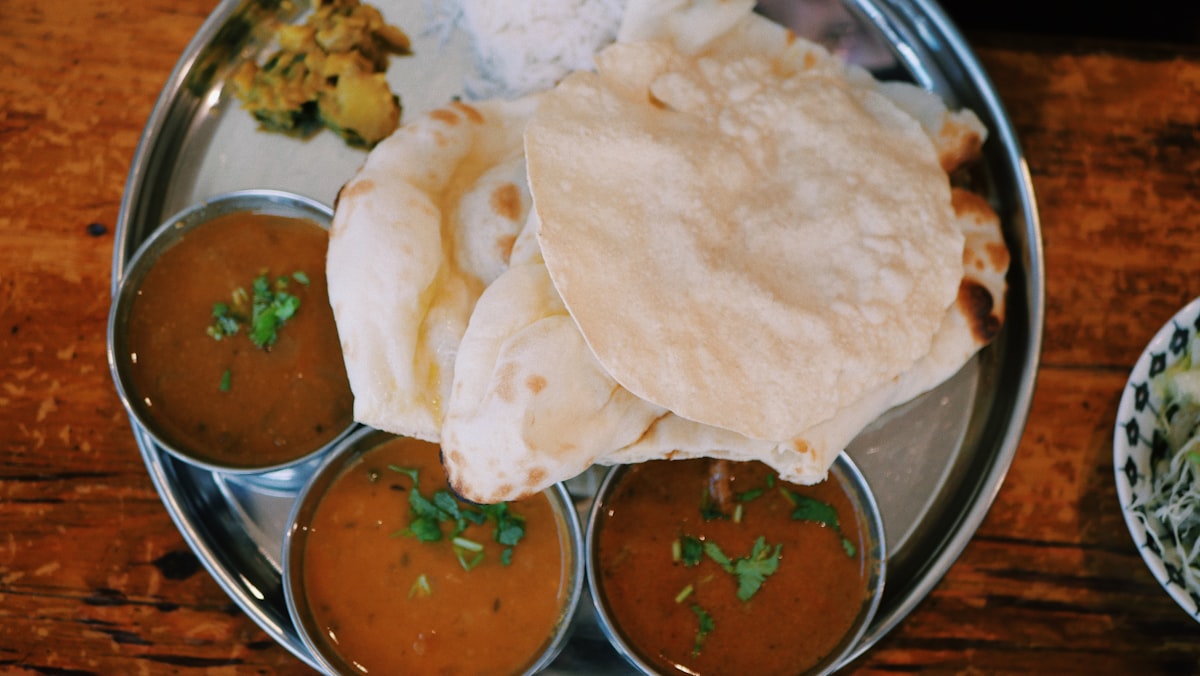
Every summer the Kwaku Festival transforms Nelson Mandela Park into the largest Afro-Caribbean festival in Europe — 300,000 visitors over four weekends of Surinamese roti, Antillean kabritu stobá, Ghanaian jollof rice, live kasekomusic, and a legendary football tournament that started the whole thing in 1975. Around Amsterdamse Poort you'll find Roopram Roti, Warung Spang Makandra, and a dozen other Surinamese kitchens serving bara, pom, and heri heri.

De Wallen: Democracy in the Red Light
Amsterdam's oldest neighborhood — De Wallen, the Red Light District — is also its most famous and least residential. Barely 4,000 people live across its narrow medieval streets, dwarfed by the millions of tourists who pass through each year. Fourteen coffeeshops sell cannabis alongside the Cannabis Museum, peep shows, and the 800-year-old Oude Kerk.
Electorally, De Wallen is Amsterdam's most fragmented zone. With an effective number of parties near 9.5, no party clears 20%. In 2022, PvdA narrowly leads, but GL, D66, and VVD are all within a few points. It's the opposite of Nieuw-West: here, no single community dominates, no single party speaks for the neighborhood.
The space cake brownie is De Wallen's most exported culinary product. But the neighborhood's real democratic recipe is fragmentation: everyone gets a taste, nobody gets the whole plate.
One city, a mosaic of peoples
Amsterdam's city-wide district is proof that electoral boundaries are not a prerequisite for local representation. Place matters. A variety of ethnic groups, many geographically anchored in historic communities, are represented by a variety of parties competing for their votes.
| 2022 | All | Non-W | Western |
|---|---|---|---|
| Eff. # parties (votes) | 9.9 | 5.5 | 7.8 |
| Eff. # parties (seats) | 7.9 | 5.3 | 7.9 |
Non-Western members hold 36% of council seats — close to their 37% share of the city's population. But look at how differently their representation is structured: non-Western members are concentrated across fewer parties (ENP 5.3 vs 7.9), anchored by PvdA and DENK. Western members spread across nearly 8 effective parties, with no single party dominant. The recipe is the same system — but the ingredients produce different results.